

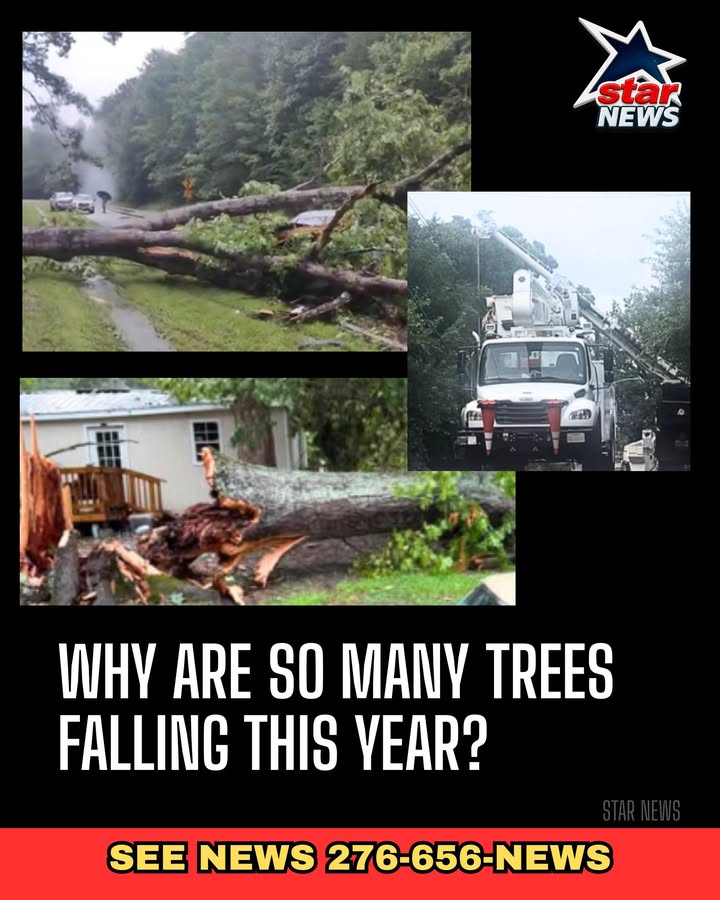
Source
facebook.com
Star News TV
🌳 1. The drought has weakened trees
This is probably the biggest factor. Virginia has been experiencing an unusually severe drought. The state reported that Virginia was roughly 8 inches below normal precipitation and experiencing its driest period since 1941.
That matters because trees under prolonged water stress can have:
weakened root systems
reduced growth
dead or dying limbs
increased susceptibility to insects and disease
less ability to withstand wind
And Henry County, Martinsville, Patrick County, Pittsylvania County and surrounding areas were specifically included in the Roanoke Drought Evaluation Region that reached emergency status.
💨 2. Then we get sudden heavy rain and strong winds
This is a nasty combination.
After months of dry soil, a heavy thunderstorm can dump a lot of water quickly. The upper soil can become saturated while deeper soil remains dry and the tree's root system is already stressed.
Then a strong wind comes through and — down goes the tree.
We've seen just how powerful these localized storms can be in Virginia this summer. A June microburst in Fairfax County produced estimated 90-mph winds, snapping and uprooting numerous trees.
🌡️ 3. Heat makes the drought stress worse
The Mid-Atlantic experienced temperatures 2–10°F above normal during portions of July, while some areas received only 25–50% of normal rainfall.
So trees have essentially been dealing with:
dry winter/spring → drought → extreme heat → stressed roots → sudden storms → high winds
That's a pretty good recipe for a tree to decide it has had enough.
🌲 4. Some trees were already compromised
Not every tree falling this year is necessarily a healthy tree being blown over.
Virginia's Department of Forestry recommends looking for dieback, cavities, decay, cracks, damaged roots, leaning trunks and poorly attached limbs as warning signs.
Drought can push an already marginal tree over the edge.
And there's another interesting factor
Virginia's wildlife plan notes that future conditions are expected to bring more heat and drought stress, which can increase tree mortality. It also says rainfall may increasingly come in fewer, larger events, producing more runoff and less water actually available to vegetation.
So what you're noticing isn't necessarily your imagination. The combination of this year's historic drought, heat, and violent summer thunderstorms is creating unusually favorable conditions for tree failures.
And around Martinsville/Henry County, I'd pay particular attention to trees that suddenly start losing leaves, develop dead branches, lean, or have exposed/cracked soil around the root zone. Those can become hazards even if they still look mostly green.
Source ref: 294815822133_1580671387408537